
Cantillon Vigneronne: Difference between revisions
| Line 8: | Line 8: | ||
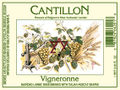
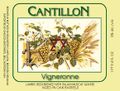
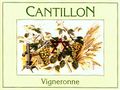
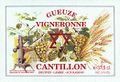
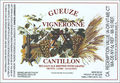
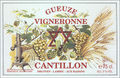
On Cantillon's official website, the brewery states that "the name Vigneronne Cantillon was given in 1987" with a bottling presumably produced in 1989, though its history dates back much further than that. Jean-Pierre Van Roy first experimented with a white grape lambic in 1973,<ref name="CantillonVigneronne>https://www.cantillon.be/vigneronne-en Cantillon - Vigneronne</ref> as well as a bottled version known as [[Cantillon_Druivenlambik_(Cuvée_Neuf_Nations)|Cuvée Neuf Nations]] in 1987 with lambic brewed in 1985. The label design for both the imported U.S version and the European version of Vigneronne remaining relatively unchanged since its creation by artist Raymond Goffin in 1989. | On Cantillon's official website, the brewery states that "the name Vigneronne Cantillon was given in 1987" with a bottling presumably produced in 1989, though its history dates back much further than that. Jean-Pierre Van Roy first experimented with a white grape lambic in 1973,<ref name="CantillonVigneronne>https://www.cantillon.be/vigneronne-en Cantillon - Vigneronne</ref> as well as a bottled version known as [[Cantillon_Druivenlambik_(Cuvée_Neuf_Nations)|Cuvée Neuf Nations]] in 1987 with lambic brewed in 1985. The label design for both the imported U.S version and the European version of Vigneronne remaining relatively unchanged since its creation by artist Raymond Goffin in 1989. | ||
This beer was previously named Gueuze Vigneronne; however, the word Gueuze was eventually dropped as it is not a blend of 1, 2, and 3-year-old | This beer was previously named Gueuze Vigneronne; however, the word Gueuze was eventually dropped as it is not a blend of 1, 2, and 3-year-old lambics.<ref name=Summit11>Dan Shelton, 2010, [[The_Lambic_Summit_2010#Part_11|The Lambic Summit, Part 11 (Shelton Brothers)]]</ref> | ||
In September of 2019 the brewery posted to Facebook that they would be changing the grape varietal from the Muscat varietal to Viognier grapes stating that "because the Muscat grapes used for the Vigneronne were not organic, we decided to move to an organic producer and to use wine grapes instead of table grapes. After some research we couldn't find organic Muscat, but we did find organic Viognier grapes." | In September of 2019 the brewery posted to Facebook that they would be changing the grape varietal from the Muscat varietal to Viognier grapes stating that "because the Muscat grapes used for the Vigneronne were not organic, we decided to move to an organic producer and to use wine grapes instead of table grapes. After some research we couldn't find organic Muscat, but we did find organic Viognier grapes." | ||
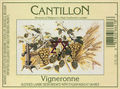
The resulting blends will also carry a new label featured below. | The resulting blends will also carry a new label featured below. | ||
There was no Vigneronne produced in the 2021/22 brewing season. According to Jean Van Roy “The transporter who was supposed to drive from the winemaker's premises to the regional depot (less than 100 km) canceled the day before the harvest. By the time another transporter was found, the harvest was over. However, thanks to the unused bins for the Viognier grapes, they were filled with Grenache Noir and Syrah for the new Saint-Lamvinus.” | |||
==Brewer's Star from Original Label== | ==Brewer's Star from Original Label== | ||
Revision as of 16:20, 24 July 2025

Description
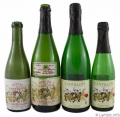
Cantillon Vigneronne is a grape lambic produced yearly from Italian white grapes, most often of the organic[1] Muscat varietal, though it depends on the harvest. Vigneronne is generally bottled sometime between mid-October and late-November. Though the brewery states that it is only available in 750 mL bottles, Vigneronne was also available in 375 mL bottles throughout the 1990s and again once in 2005. The fruiting process for Vigneronne consists of taking fresh grapes and placing them whole (without stems) into stainless steel tanks with 2 to 3-year-old lambic for a maceration period of 1-2 months. It is then transferred to a stainless steel bottling tank until it is ready to be bottled. In 2019, the varietal was changed to an organic Viognier.
History / Other Notes
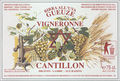
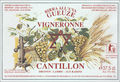
On Cantillon's official website, the brewery states that "the name Vigneronne Cantillon was given in 1987" with a bottling presumably produced in 1989, though its history dates back much further than that. Jean-Pierre Van Roy first experimented with a white grape lambic in 1973,[2] as well as a bottled version known as Cuvée Neuf Nations in 1987 with lambic brewed in 1985. The label design for both the imported U.S version and the European version of Vigneronne remaining relatively unchanged since its creation by artist Raymond Goffin in 1989.
This beer was previously named Gueuze Vigneronne; however, the word Gueuze was eventually dropped as it is not a blend of 1, 2, and 3-year-old lambics.[3]
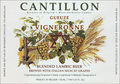
In September of 2019 the brewery posted to Facebook that they would be changing the grape varietal from the Muscat varietal to Viognier grapes stating that "because the Muscat grapes used for the Vigneronne were not organic, we decided to move to an organic producer and to use wine grapes instead of table grapes. After some research we couldn't find organic Muscat, but we did find organic Viognier grapes."
The resulting blends will also carry a new label featured below.
There was no Vigneronne produced in the 2021/22 brewing season. According to Jean Van Roy “The transporter who was supposed to drive from the winemaker's premises to the regional depot (less than 100 km) canceled the day before the harvest. By the time another transporter was found, the harvest was over. However, thanks to the unused bins for the Viognier grapes, they were filled with Grenache Noir and Syrah for the new Saint-Lamvinus.”
Brewer's Star from Original Label
The six point brewer's star displayed on the label, which is identical to the Jewish Star of David, actually has its roots in alchemy. It represents the balance between fire, air, water, and earth. The Museum and Beer and Brewing explains the balance as such:
- These elements include Fire, the masculine element of action and determination, portrayed by a triangle facing the heavens. The masculine element of air which deals with communication and intelligence is also a triangle, facing upward, but with a horizontal line symbolizing the clouds at the top of the mountain.
- These two elements are ascending and are governed by the principal of levity. The feminine element of water is represented by a triangle facing the earth - like the rivers that flow to the lowest grounds. Earth is the other feminine element that is represented by a triangle pointing down with a horizontal line representing the surface of the earth. These two elements are ruled by the principal of gravity. Combined these four elements represent the Great Work in alchemy, which means harmony balance and peace. [4]
The Brewer's Star, displayed at the Schaerbeek Museum of Beer:

Bottle Log
| Bottle date
(mm/dd/yyyy) |
Cork Date | Bottle Size | Label / Notes | Image Link | |
|---|---|---|---|---|---|
| N/A | 1992 | 750 mL | N/A | N/A | |
| N/A | 1996 | 375 mL | N/A | ||
| N/A | 1996 | 750 mL | Cuvée Akkurat | N/A | |
| N/A | 1998 | 750 mL | N/A | ||
| N/A | 1999 | 375 mL | N/A | ||
| N/A | 1999 | 750 mL | No writing on front label beyond Vigneronne and bottle size. | N/A | |
| N/A | 2002 | 750 mL | Heavy black foil over the cap | N/A | |
| N/A | 2004 | 750 mL | Heavy black foil over the cap, made with Chasselas grapes | N/A | |
| N/A | 2005 | 375 mL | Sold in Denmark | N/A | |
| N/A | 2005 | 750 mL | Best by 12/2009 | N/A | |
| 10/30/2006 | 2006 | 750 mL | N/A | ||
| N/A | 2007 | 750 mL | N/A | ||
| 12/24/2008 | 2008 | 750 mL | N/A | ||
| 11/05/2009 | 2009 | 750 mL | N/A | ||
| 09/29/2010 | 2010 | 750 mL | N/A | ||
| 11/22/2010 | 2010 | 750 mL | N/A | ||
| 11/24/2011 | 2011 | 750 mL | N/A | ||
| 11/28/2011 | 2011 | 750 mL | N/A | ||
| 11/30/2011 | 2011 | 750 mL | N/A | ||
| 11/23/2012 | 2012 | 750 mL | N/A | ||
| 10/22/2013 | 2013 | 750 mL | N/A | ||
| 10/29/2014 | 2014 | 750 mL | European labeling | N/A | |
| 11/09/2015 | 2015 | 750 mL | Shelton Brothers rear label from early 2000s, but 2015 date stamp | 
| |
| 11/12/2015 | 2015 | 750 mL | European labeling | 
| |
| 10/25/2016 | 2016 | 750 mL | 
| ||
| 09/08/2017 | Season 17/18 | 750 mL | 
| ||
| 10/22/2017 | Season 17/18 | 750 mL | 
| ||
| 10/22/2017 | Season 17/18 | 750 mL | Shelton Brothers rear label from early 2000s, but 2017 date stamp | 
| |
| 11/22/2017 | Season 18/19 | 750 mL | 
| ||
| 10/12/2018 | Season 18/19 | 750 mL | European labeling | 
| |
| 10/15/2018 | Season 18/19 | 750 mL | European labeling | 
| |
| 10/10/2019 | Season 19/20 | 750 mL | New (European) label, first batch with Viognier grapes | 
| |
| 10/17/2019 | Season 19/20 | 750 mL | New label / first batch with Viognier grapes | 
| |
| 10/12/2020 | Season 20/21 | 750 mL | Viognier grapes | 
| |
| 10/14/2020 | Season 20/21 | 750 mL | Viognier grapes | 
| |
| 10/11/2021 | Season 21/22 | 750 mL | Viognier grapes | 
| |
| 10/11/2023 | Season 23/24 | 750 mL | Viognier grapes | ||
| 09/30/2024 | 2024 | 750 mL | Viognier grapes |
Label
-
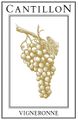 2019 label for Viognier varietal
 -
-
-
-
-
-
-
-
-
-
-
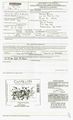 U.S. label approval application, 2001


Label Text (European):
A fine compromise between wine and beer, this is the Vigneronne Cantillon 100% lambic. The fruity taste of the white grape harmonized with the powerful character of a two years old lambic make from the Vigneronne Cantillon a unique beer. Beer with a taste evolution. Store and serve at temperature 10-13C/50-55F. To enjoy completely the fruity taste of the Vigneronne Cantillon drink it better in the year after the purchase.
To be drunk preferably within the 10 years after the bottling date.
Photos
-
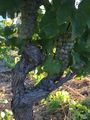 Viognier Grapes from the 2020 harvest on the vine, courtesy of Christophe Bosque
 -
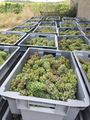 Viognier harvest, 2020. Courtesy of Christophe Bosque
 -
-
-
-
-


References
- ↑ Basic Brewing Radio Podcast, May 30, 2013
- ↑ https://www.cantillon.be/vigneronne-en Cantillon - Vigneronne
- ↑ Dan Shelton, 2010, The Lambic Summit, Part 11 (Shelton Brothers)
- ↑ The Six Point Brewer's Star, The Museum of Beer and Brewing, http://www.brewingmuseum.org/articles/six-point-brewers-star