
Cantillon Rosé de Gambrinus: Difference between revisions
| (5 intermediate revisions by the same user not shown) | |||
| Line 3: | Line 3: | ||
__NOTOC__ | __NOTOC__ | ||
== Description == | == Description == | ||
Cantillon Rosé de Gambrinus is a traditional raspberry lambic (framboise) bottled regularly by Cantillon. Its fruit | Cantillon Rosé de Gambrinus is a traditional raspberry lambic (framboise) bottled regularly by Cantillon. Its fruit concentration is generally around 200 g/L. The fruiting process for Rosé de Gambrinus consists of taking pre-frozen raspberries and placing them in stainless steel tanks with an average age of 20-month-old lambic for a maceration period of 1-2 months. It is then transferred to a stainless steel bottling tank until it is ready to be bottled. A quantity of young lambic is added equal to one-third of the volume of the fruited lambic before bottling to obtain secondary fermentation.<ref name = CantillonBrochure> Brasserie Cantillon - Tour Brochure (English) </ref> | ||
== History / Other Notes == | == History / Other Notes == | ||
| Line 21: | Line 21: | ||
==From Framboise Lambic to Rosé de Gambrinus== | ==From Framboise Lambic to Rosé de Gambrinus== | ||
The history of raspberry lambic at Brasserie Cantillon dates back to as far as 1909 when inventory taken by Paul Cantillon “indicates that the cellar contain[ed] more raspberry beer than kriek”.<ref name=GrummelslinkseJune> Van Roy, Jean-Pierre. (2016a). Grummelinkse – June 2016. Musée Bruxellois de la Gueuze. Brussels, BE.</ref> Fruited beers disappeared from the brewery’s lineup during World War I, but during the 1920s Kriek was produced again and raspberry lambic reappeared for a short time in the 1930s. Shortly after World War II, as lambic became less popular and many breweries turned to sweetening their beers, the tradition of making raspberry lambic at Cantillon disappeared. However, in 1973 Jean-Pierre decided to begin producing the beer again when a friend of the brewery, Willy Gigounon, showed up at the brewery with 150 | The history of raspberry lambic at Brasserie Cantillon dates back to as far as 1909 when inventory taken by Paul Cantillon “indicates that the cellar contain[ed] more raspberry beer than kriek”.<ref name=GrummelslinkseJune> Van Roy, Jean-Pierre. (2016a). Grummelinkse – June 2016. Musée Bruxellois de la Gueuze. Brussels, BE.</ref> Fruited beers disappeared from the brewery’s lineup during World War I, but during the 1920s Kriek was produced again and raspberry lambic reappeared for a short time in the 1930s. Shortly after World War II, as lambic became less popular and many breweries turned to sweetening their beers, the tradition of making raspberry lambic at Cantillon disappeared. However, in 1973 Jean-Pierre decided to begin producing the beer again when a friend of the brewery, Willy Gigounon, showed up at the brewery with 150 kg of raspberries. | ||
Throughout the 1970s and 1980s the brewery sourced raspberries from within the Pajottenland from a farm near the small village of Liedekerke. Harvested in July, the farmer would hire a group of students to come to the farm and pick the berries to fill buckets full of 20 | Throughout the 1970s and 1980s the brewery sourced raspberries from within the Pajottenland from a farm near the small village of Liedekerke. Harvested in July, the farmer would hire a group of students to come to the farm and pick the berries to fill buckets full of 20 kg at a time. Jean-Pierre notes that the farmer would “weigh them to nearest gram”<ref name=GrummelslinkseJune> Van Roy, Jean-Pierre. (2016a). Grummelinkse – June 2016. Musée Bruxellois de la Gueuze. Brussels, BE.</ref> and that due to Belgium’s rainy summer climate, the buckets would also be filled with quite a bit of water. | ||
[[File:Label Cantillon Zwanze 2016.jpg|right|300px|thumb|A re-make of the old Cantillon Framboise label for Zwanze 2016]] | [[File:Label Cantillon Zwanze 2016.jpg|right|300px|thumb|A re-make of the old Cantillon Framboise label for Zwanze 2016]] | ||
| Line 55: | Line 55: | ||
==Bottle Log== | ==Bottle Log== | ||
<center> | <center> | ||
{| class="wikitable" border="1" style="text-align: center; " | |||
{| class="mw-collapsible mw-collapsed wikitable" border="1" style="text-align: center; " | |||
|+ Bottle Log | |||
|- | |- | ||
! Bottle date | ! Bottle date | ||
(mm/dd/yyyy) | (mm/dd/yyyy) | ||
| Line 156: | Line 159: | ||
|12/11/2019||Season 19/20||375 mL||European labeling||[[File:Cantillon RdG 11 Dec 2019 375.jpg|frameless|30px]] | |12/11/2019||Season 19/20||375 mL||European labeling||[[File:Cantillon RdG 11 Dec 2019 375.jpg|frameless|30px]] | ||
|- | |- | ||
|03/03/2020||Season 19/20||375 mL | |03/03/2020||Season 19/20||375 mL & 750 mL||European labeling||[[File:Cantillon Gambrinus 03 Mar 2020.jpg|frameless|30px]] | ||
|- | |- | ||
|04/20/2020||Season 19/20||750 mL||European labeling||[[File:Cantillon Gambrinus 20 Apr 2020.JPG|frameless|30px]] | |04/20/2020||Season 19/20||750 mL||European labeling||[[File:Cantillon Gambrinus 20 Apr 2020.JPG|frameless|30px]] | ||
| Line 171: | Line 172: | ||
|- | |- | ||
|03/08/2021||Season 20/21||375 mL||European labeling||[[File:Cantillon Gambrinus 8 Mar 2021.jpg|frameless|30px]] | |03/08/2021||Season 20/21||375 mL||European labeling||[[File:Cantillon Gambrinus 8 Mar 2021.jpg|frameless|30px]] | ||
|- | |||
|08/02/2022||2022||750 mL||-||- | |||
|- | |||
|07/10/2023||Season 22/23||750 mL||-||- | |||
|- | |||
|03/14/2024||2024||750 mL||-||- | |||
|- | |||
|05/27/2024||2024||750 mL||-||- | |||
|- | |||
|07/08/2024||2024||750 mL||-||- | |||
|- | |||
|09/10/2024||2024||750 mL||-||- | |||
|- | |||
|04/25/2025||2025||750 mL||-||- | |||
|- | |- | ||
|} | |} | ||
Latest revision as of 18:59, 23 July 2025

Description
Cantillon Rosé de Gambrinus is a traditional raspberry lambic (framboise) bottled regularly by Cantillon. Its fruit concentration is generally around 200 g/L. The fruiting process for Rosé de Gambrinus consists of taking pre-frozen raspberries and placing them in stainless steel tanks with an average age of 20-month-old lambic for a maceration period of 1-2 months. It is then transferred to a stainless steel bottling tank until it is ready to be bottled. A quantity of young lambic is added equal to one-third of the volume of the fruited lambic before bottling to obtain secondary fermentation.[1]
History / Other Notes
Cantillon has been making framboise since 1909. The history prior to 1986 is described further on the Cantillon Framboise page.
The name Rosé de Gambrinus first made an appearance on a bottle in 1986 with the base lambic having been brewed in 1984 (see below for complete history). It has been in Cantillon's regular lineup ever since. There have been slight variations to the Rosé de Gambrinus label design over the years but it has remained generally consistent. The most notable variation involved briefly clothing the woman due to label approval issues in the United States.
Rosé de Gambrinus has undergone one notable recipe change. Prior to the 2004-05 brew season, Cantillon used Belgian raspberries. Because Belgian raspberries did not add enough color, Cantillon would blend in between 5% and 10% kriek. In 2004-05, because it was difficult to find enough Belgian raspberries, Cantillon switched to Hungarian raspberries. With the Hungarian raspberries providing enough color, Cantillon no longer blended kriek into Rosé de Gambrinus.[2]
While framboise is most commonly served fresh, Jean Van Roy stated during the Lambic Summit (Part 15) that: "the raspberry is probably the fruit where the taste and color disappears the most quickly, but you can conserve the raspberry lambic. We have Rosé de Gambrinus for more than 10 years at the brewery. And the beers are great. But you have less fruit taste, less fruit taste, in comparison to a kriek for example, a kriek from the same age. But it’s possible to conserve a raspberry lambic. For the people with a Rosé de Gambrinus in the cellar, don’t be afraid. The beer is going to be great."[3]
On February 21, 2008 a label for the kegged version of Rosé de Gambrinus was approved by the TTB. [4]
In 2025. a rumor was going around stating that the amount of fruit in Rosé de Gambrinus was increased and the overall profile became closer to Lou Pepe Framboise, which lead to a decision by the brewery to stop producing the Lou Pepe version. Jean Van Roy confirmed the rumor to be false, indeed Rosé de Gambrinus became more aromatic over the years, but it is due to the fruits being more aromatic and flagrant themselves, probably due to global warming, and the amount added to the beer was never increased. The discontinuation of Lou Pepe Framboise has nothing to do with it.[5]
From Framboise Lambic to Rosé de Gambrinus
The history of raspberry lambic at Brasserie Cantillon dates back to as far as 1909 when inventory taken by Paul Cantillon “indicates that the cellar contain[ed] more raspberry beer than kriek”.[6] Fruited beers disappeared from the brewery’s lineup during World War I, but during the 1920s Kriek was produced again and raspberry lambic reappeared for a short time in the 1930s. Shortly after World War II, as lambic became less popular and many breweries turned to sweetening their beers, the tradition of making raspberry lambic at Cantillon disappeared. However, in 1973 Jean-Pierre decided to begin producing the beer again when a friend of the brewery, Willy Gigounon, showed up at the brewery with 150 kg of raspberries.
Throughout the 1970s and 1980s the brewery sourced raspberries from within the Pajottenland from a farm near the small village of Liedekerke. Harvested in July, the farmer would hire a group of students to come to the farm and pick the berries to fill buckets full of 20 kg at a time. Jean-Pierre notes that the farmer would “weigh them to nearest gram”[6] and that due to Belgium’s rainy summer climate, the buckets would also be filled with quite a bit of water.

As tends to be the case with raspberries and beer, it can become quite sour and it was relatively weather dependent as to whether the harvest was acidic or sweet. Jean-Pierre recalls that “customers would be very critical when the raspberries used were of lower quality”.[6] That is not to say, however, that the beer was unpopular. Van Roy recalls a time when over 600 bottles of raspberry lambic were opened over three days at the Francs-Bourgeois festival.[6]
The approximate timeframe for the addition of vanilla is unknown (roughly the 1980s) but it is credited to a friend of the brewery named Guy Derdelinckx. According to Van Roy, “one day Guy suggested I try a new aperitif, whereupon he reached into the refrigerator and took out a bottle of raspberry lambic containing a pod of vanilla. When I tasted it I was pleasantly surprised because it turned out that the vanilla flavor really offset the beer’s excessive tartness. Guy had had a stroke of genius and thanks to him I was able to naturally soften the somewhat rough character of certain vintages”.[6] From that point forward, the brewery used a small amount of vanilla extract in each batch.
In addition to using vanilla to cut down on the acidity, at one point a customer of the brewery named Paul Coorevits came up with a drink called the ‘Brussels Kir’ which was “Cantillon raspberry lambic in a flute glass mixed with a bit of strawberry liqueur” that not only would “bring down the tartness, it also enhanced the beer’s colour.[6]
In the 1970s and 1980s, raspberry lambic was much more pale than we are accustomed to today. To enhance the color, Jean-Pierre mixed the raspberry lambic “with a certain portion of kriek” along with a small portion of vanilla[6] as evidenced on the pink Famboise Cantillon label. This color ended up being the inspiration for what we now know today as Rosé de Gambrinus[6], but the name did not come from the Van Roy family. An artistic friendship would eventually lead to the renaming and relabeling of this beer.

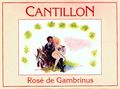
The history of the famous label for Rosé de Gambrinus dates back to 1980 when Jean-Pierre Van Roy suggested to Belgian watercolorist Albert Borret that “he get together a few artists and organise an exhibition at the brewery to celebrate the second anniversary of the Brussels Gueuze Museum”.[7] A total of eight painters and two sculptors attended this exhibition, two of whom were Raymond Goffin and Raymond Coumans who were close friends. Because of the brewery’s financial situation at the time and because the museum society was not as well established as it is today, both Goffin and Coumans offered to produce three drawings each to be put up for sale by the museum society.
The friendship struck up among the brewery and Coumans would eventually lead to Coumans inspiring the name of the beer and producing its famous label. In 1985, Jean-Pierre was in the cellars of Cantillon drawing Framboise Lambic from the barrels to be put into the bottling tank. Coumans entered the cellar and was “marveling at the colour of the raspberry lambic coming out of the barrel”[7] and into the copper buckets.
Jean-Pierre Van Roy outlines the following exchange:
- - “Jean-Pierre, this beer has the clour of onion skin. You have to call it “Rosé’”, he told me.
- - “But Raymond, that’s a name used for wine!”
- - “Jean-Pierre, this beer has the clour of onion skin. You have to call it “Rosé’”, he told me.

Then, in a very formal manner he said, “it will be called Rosé de Gambrinus and I’ll make the label for you.”[7]
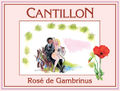
The label depicts King Gambrinus, modeled on the mythical German king Gambrivius, who is said to have learned the craft of brewing from the Egyptian gods Isis and Osiris. Gambrinus is credited in European lore with having invented beer, and he is cited in English, British, German, and Belgian drinking lore as well.[8] On the label, one can see King Gambrinus seated in a garden with a naked woman seated on his lap. This woman “is holding a goblet of beer in her left hand and will give it to her attentive escort if he is worthy of what is about to happen”.[7]
This label and name was first put on bottles of Cantillon raspberry lambic in 1986. Starting in 1990, Brasserie Cantillon began working with Wide World Imports Inc to export their beer to the United States. Unsurprisingly, the original label for Rosé de Gambrinus was unsuitable for shelves in the United States and thus needed to be reworked for federal approval. Maurice Coja, head of the U.S. import company, sent back a proposed label on which he had clothed the woman on the label in a black bra and mini-skirt. Upon seeing the reworked label the original artist, Coumans, remarked: “Tell the Yank where he can put his suggestion, and also tell him that I’ll draw the woman’s clothes on myself”.[7]
Coumans came back with reworked art covering the woman up in a long blue dress noting that “the young lady is wearing a light blue dress. But most importantly, and the Americans need to know this, underneath the dress she’s in the buff”.[7] At the time, even Playboy magazine featured a story on it. When Shelton Brothers took over the import duties in 1996 the labels were then switched back to the original undressed woman.
Bottle Log
| Bottle date
(mm/dd/yyyy) |
Cork Date | Bottle Size | Label / Notes | Image Link |
|---|---|---|---|---|
| N/A | 1997 | 750 mL | Front label not glossy, no pink border, does not have back label | - |
| N/A | 2003 | 375 mL | - | |
| N/A | 2004 | 375 mL | Naked lady label, not from the US. | - |
| N/A | 2005 | 375 mL | Naked lady label, not from the US. | - |
| N/A | 2005 | 750 mL | - | |
| N/A | 2006 | 375 mL | Naked lady label, not from the US. | - |
| 02/07/2007 | 2007 | 375 mL | - | |
| 03/26/2009 | 2009 | 375 mL | - | |
| 04/13/2010 | 2010 | 750 mL | - | |
| 06/17/2010 | 2010 | 750 mL | - | |
| 09/29/2010 | 2010 | 750 mL | - | |
| 12/29/2010 | 2010 | 375 mL | - | |
| 03/21/2011 | 2011 | 375 mL | - | |
| 04/18/2011 | 2011 | 375 mL | 
| |
| 12/22/2011 | 2011 | 750 mL | - | |
| 03/08/2012 | 2012 | 75 0mL | - | |
| 09/26/2012 | 2012 | 375 mL | - | |
| 09/28/2012 | 2012 | 375 mL | Canadian import | - |
| 02/14/2013 | 2013 | 750 mL | Naked lady label, not from the US. | - |
| 02/18/2013 | 2013 | 375 mL | - | |
| 09/03/2013 | 2013 | 375 ml | - | |
| 11/20/2013 | 2013 | 375 mL | - | |
| 11/21/2013 | 2013 | 750 mL | - | |
| 11/28/2013 | 2013 | 750 mL | 
| |
| 02/03/2014 | 2013 | 375 mL | 2013 cork, 2014 label | - |
| 02/06/2014 | 2014 | 750 mL | - | |
| 12/11/2014 | 2014 | 750 mL | Naked lady label, not from the US | - |
| 12/14/2014 | 2014 | 375 mL | Naked lady label, not from the US. | - |
| 03/12/2015 | 2015 | 375 mL | Quebec import | - |
| 03/18/2015 | 2015 | 750 mL | Quebec import | - |
| 04/29/2015 | 2015 | 750 mL | Naked lady label, not from the US | - |
| 05/20/2015 | 2015 | 750 mL | Naked lady label, not from the US | 
|
| 09/28/2015 | 2015 | 750 mL | Naked lady label, not from the US | - |
| 09/29/2015 | 2015 | 375 mL | Naked lady label, not from the US | - |
| 01/11/2016 | 2016 | 375 mL | Naked lady label, not from the US | - |
| 01/26/2016 | 2016 | 750 mL | Naked lady label, not from the US | - |
| 04/11/2016 | 2016 | 375 mL | Naked lady label, not from the US | - |
| 09/26/2016 | 2016 | 375 mL | Naked labdy label, not from the US | 
|
| 12/29/2016 | 2016 | 375 mL | 
| |
| 03/01/2017 | Season 16/17 | 750 mL | 
| |
| 11/16/2017 | Season 17/18 | 750 mL | 
| |
| 01/16/2018 | Season 17/18 | 750 mL | - | |
| 05/23/2018 | Season 18/19 | 750 mL | European label | 
|
| 06/27/2018 | Season 18/19 | 750 mL | US label | 
|
| 01/07/2019 | Season 18/19 | 750 mL | US and European labeling | 
|
| 12/11/2019 | Season 19/20 | 375 mL | European labeling | 
|
| 03/03/2020 | Season 19/20 | 375 mL & 750 mL | European labeling | 
|
| 04/20/2020 | Season 19/20 | 750 mL | European labeling | 
|
| 06/28/2020 | Season 19/20 | 375 mL | American labeling | 
|
| 06/29/2020 | Season 19/20 | 750 mL | American labeling | 
|
| 11/09/2020 | Season 20/21 | 750 mL | American labeling | 
|
| 01/05/2021 | Season 20/21 | 750 mL | European labeling | 
|
| 03/08/2021 | Season 20/21 | 375 mL | European labeling | 
|
| 08/02/2022 | 2022 | 750 mL | - | - |
| 07/10/2023 | Season 22/23 | 750 mL | - | - |
| 03/14/2024 | 2024 | 750 mL | - | - |
| 05/27/2024 | 2024 | 750 mL | - | - |
| 07/08/2024 | 2024 | 750 mL | - | - |
| 09/10/2024 | 2024 | 750 mL | - | - |
| 04/25/2025 | 2025 | 750 mL | - | - |
Label Log
-
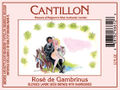
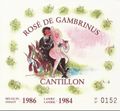 First blend of Gambrinus numbered label, courtesy of Berto Carduus
 -
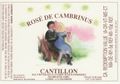 World Wide Imports, U.S. label, courtesy of Berto Carduus
 -
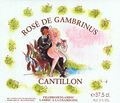
-

-
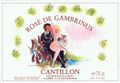
-
-
-
-
-
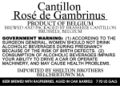
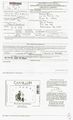 U.S. label approval application, 2001


References
- ↑ Brasserie Cantillon - Tour Brochure (English)
- ↑ The Lambic Summit 2010, Part 11
- ↑ The Lambic Summit 2010, Part 15
- ↑ TTB Label Approval, Cantillon Rosé De Gambrinus, 2008
- ↑ Lambic.Info Interview with Jean Van Roy, february 2025
- ↑ 6.0 6.1 6.2 6.3 6.4 6.5 6.6 6.7 Van Roy, Jean-Pierre. (2016a). Grummelinkse – June 2016. Musée Bruxellois de la Gueuze. Brussels, BE.
- ↑ 7.0 7.1 7.2 7.3 7.4 7.5 Van Roy, Jean-Pierre. (2016a). Grummelinkse – September 2016. Musée Bruxellois de la Gueuze. Brussels, BE.
- ↑ Birmingham, Frederic-Alexander. (1970). Falstaff’s Complete Beer Beer Book. Ward Books. New York, NY.
Photos


